

Julio Katinsky
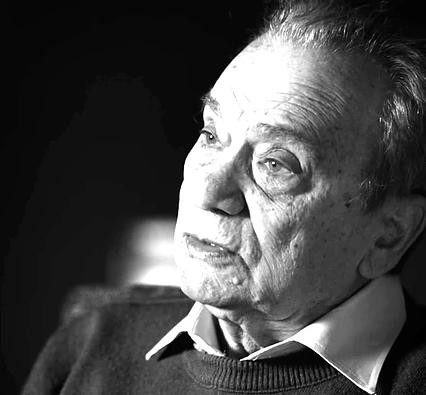
Julio Roberto Katinsky was born in the city of Salto, São Paulo, and graduated in architecture from the Faculty of Architecture and Urbanism at the University of São Paulo (FAU-USP) in 1957. In 1973, he completed his doctorate in the field at the same university. From the 1960s onward, he worked intensively as an architect, slowing down in 1980 and resuming production in 1990. Since the early 1960s, he also worked as a professor at FAU. In the early years, he was an assistant lecturer until becoming a professor-doctor. He retired in 2002 but continues to provide services to the institution, developing research and teaching graduate courses.
Katinsky became known for designing public school buildings and for his research in school architecture. For him, the great challenge in Brazil has always been to design schools capable of making students feel as comfortable as they would at home. “Beyond creating buildings, I have always sought to give architectural quality to my projects. This is not mandatory; the architect must have this artistic intention,” the architect said in an interview. “Spaces must be generous so that students absorb this amplitude.”
Alongside names such as Lucio Costa, João Batista Vilanova Artigas, Oscar Niemeyer, and Rino Levi, Katinsky belongs to a generation of architects concerned with participating in Brazilian scientific and technological development who changed the history of architecture and furniture design in the country. In addition to valuing engineering work, these professionals believed that by conceiving more inviting and welcoming spaces, they were contributing to the intellectual growth of the people who would use them.
Titled “A Casa Bandeirista – Nascimento e Reconhecimento da Arte em São Paulo,” his 1973 doctoral thesis studied how the hypothesis that the São Paulo house is the result of the fusion of Portuguese and indigenous houses was discovered. In addition to this thesis, there is another study of his authorship, “Arquitetura Brasileira no Brasil Colonial,” in which the architect and academic shows how Brazilian space began to take shape. Throughout his professional life, he collected numerous awards and honorable mentions in architecture and produced an extensive bibliography, including articles, texts for newspapers and magazines, conferences, and books.
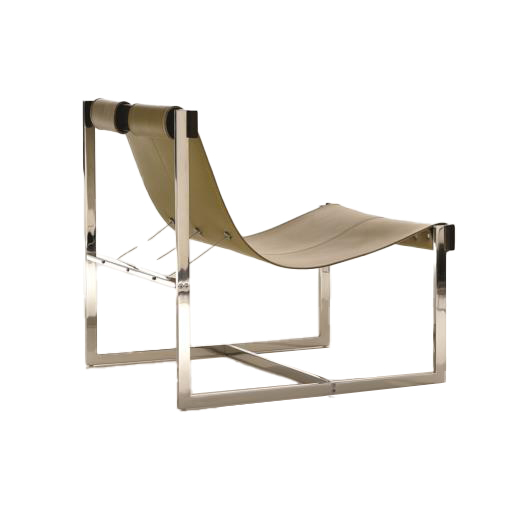
In 1959, to fulfill a private commission from a client, he designed the famous Katinsky armchair, a precious example of modern furniture design in Brazil, which was produced by several Brazilian manufacturers. In the late 1960s, he created the Katinsky bench, originally named Tamborete, with the same inspiration as the armchair. The pieces were reissued in 2012 according to the author’s original specifications.