





Giancarlo Mattioli
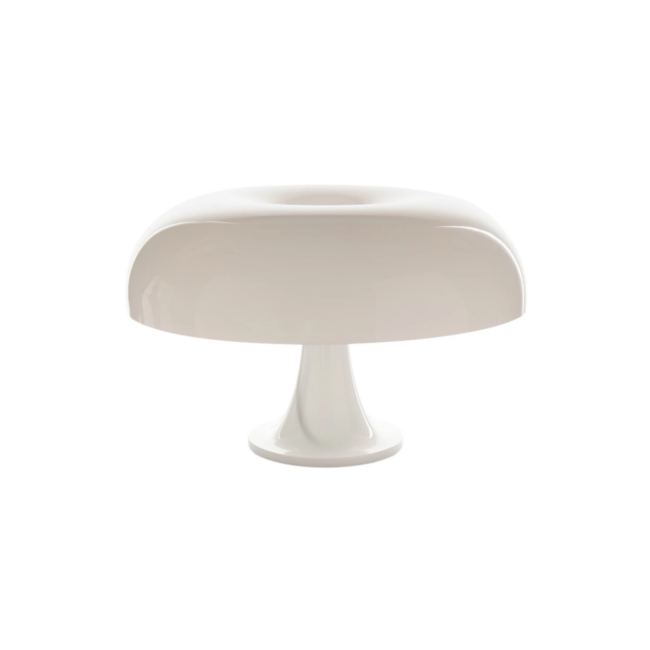
Born in Bologna in 1933, Giancarlo Mattioli was an Italian designer, architect, urban planner, portraitist, and intellectual who achieved great success in the 1950s and 1960s. A former art school student, he continued to cultivate his passion for pen drawing, which he learned from his teachers. He graduated in architecture in Florence and, in 1961, founded the “Città Nuova” Group of Urbanist Architects together with Pierluigi Cervellati, Umberto Maccaferri, Franco Morelli, Gianpaolo Mazzucato, and Mario Zaffagnini. In 1965, with the “Città Nuova” Group of Urbanist Architects, he took part in the “Studio Artemide Domus di Milano” competition, through which Artemide and Editrice Domus sought to discover new ways of conceiving lamps as lighting objects. The submitted project was a lamp inspired by the shape of a jellyfish, in which Mattioli and the Group’s professionals worked on new ways to achieve a soft ambient light using a device designed to conceal the bulb. The project was a success, and the lamp was produced from 1967 under the name Nesso; it then became a symbolic icon of those years and enjoyed long-lasting success, as evidenced by the fact that it is still part of the permanent collection of the Museum of Modern Art (MoMA) in New York. A designer of modern classics, Mattioli never hesitated to think outside the box: an intellectual with a true civic passion, he was also the technical author of the Municipality of Bologna’s historic urban plans of the late 1960s. He was hired by then-councilor Giuseppe Campos Venuti, where he remained continuously as an employee and senior manager of the technical offices until 1999. He contributed to the plan for the historic center, the hillside plan, the industrial district plan, the 1985–86 master plan, and the new rail junction. He passed away in 2018, at 85 years of age.
See all
